.png)
What Happens When Two Fintechs Swap Engineers
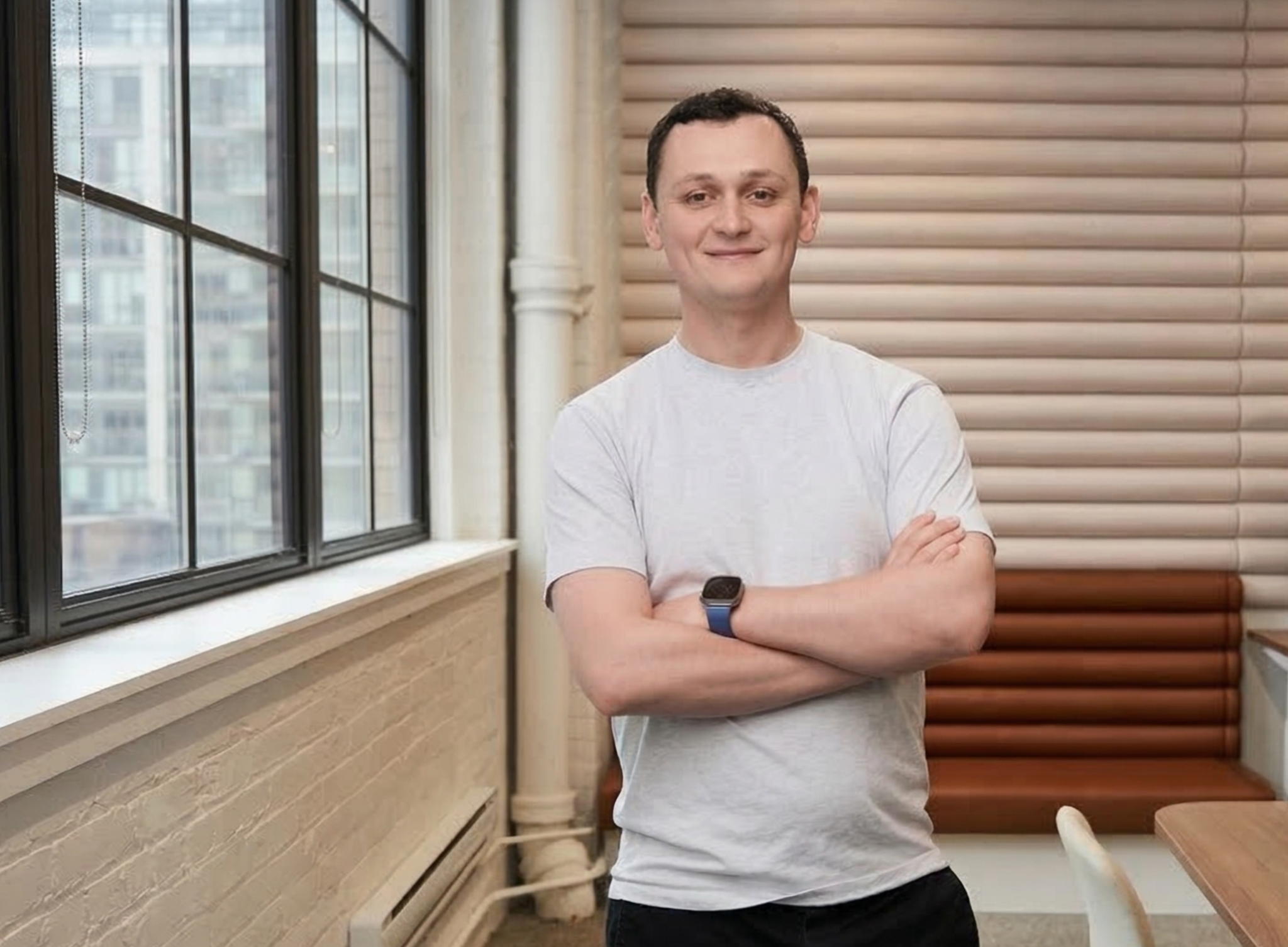
Carl Bennett - a senior engineer on exchange from Sharesies - sits down with Dorra Bouchiha, Senior Director of Software Development, to talk ledgers, scale, and what the fintech industry gets wrong about knowledge sharing.
Carl Bennett isn't a typical new hire. He's a senior engineer from Sharesies - the New Zealand-based investing platform that's put roughly 15% of the country's population on a brokerage - who packed up and moved to Toronto for a year to work on Wealthsimple's Ledger team. It's the first partnership of its kind between the two companies, and a model that's rare in the fintech industry.
We sat down two months into his time here to ask the obvious questions: What do two fintech platforms at very different scales actually have to learn from each other? And what does it feel like to walk into a codebase ten times the size of the one you came from?
Dorra: Let's start with foundations. What does a ledger actually do in a fintech product, and why is it so hard to get right?
Carl: At its core, a ledger is how we track the assets we hold on behalf of our clients - every financial transaction, recorded with precision and permanence.
The reason it's hard isn't the concept. It's the centrality. Every other system depends on the ledger working in a consistent, reliable way: our Operations team, our Finance team, external auditors, and most of the product surface area. That means when the ledger works, nobody thinks about it. But if you ever need to change it - because it no longer fits your product ambitions or your scale - you're not making a technical change in isolation. You're coordinating a large group of people across the business, all of whom have different needs and different definitions of what right looks like.
That's what makes it genuinely hard. And that challenge doesn't go away at any scale.
Dorra: Wealthsimple is roughly 10x the scale of Sharesies. Where does that size difference actually change the ledger problem, and where is it just more of the same?
Carl: Scale adds real technical constraints. There are ledger architectures that work at Sharesies' transaction volume that simply wouldn't hold up at Wealthsimple's. That part is straightforward.
What's more interesting is that the two architectures reflect very different historical paths - and each has things to learn from the other. Sharesies built its ledger with real-time capabilities from early on, out of necessity. Wealthsimple's ledger has scaled impressively through some clever engineering, but there's a recognized opportunity to modernize the core to match the pace and ambition of where the product is going. That's actually a big part of what the Ledger team is focused on right now, and it's a meaningful reason why my experience at Sharesies is directly relevant here.
The deeper point, though, is that technical constraints are only part of the ledger challenge. Flexibility, comprehensibility, completeness…those problems are constant, regardless of scale. And in my experience, they're often harder to solve. You can find clever engineering workarounds for scale. You can't really engineer your way out of "nobody understands what this ledger is doing."
Dorra: What's something Wealthsimple does at the ledger layer that genuinely surprised you?
Carl: Wealthsimple draws a clear distinction between asset movements that require a historical record and those that are only relevant in the moment. Only the former get written to the ledger. The cash paid and shares received for a share purchase should be ledgered; the initial cash reservation doesn't need to be.
At Sharesies, we write everything to the ledger. It's simpler in some ways, but the consequence is that we track significantly more historical data than is actually necessary.
What struck me was that this distinction had simply never occurred to us. We built our ledger from first principles, and this particular design decision wasn't one we arrived at. Seeing it in practice at Wealthsimple made it immediately obvious that it has real advantages - in storage, in query performance, in keeping the ledger focused on what actually matters. This kind of knowledge sharing is exactly why this exchange program is valuable.
Dorra: How does Wealthsimple approach making the ledger legible across the business - not just to engineers?
Carl: This is a genuinely interesting problem, and one I think the industry broadly underinvests in.
A ledger that only engineers can interpret is a liability. When something goes wrong, you need your Operations team, your Finance team, and your leadership to be able to understand what they're looking at - quickly. At Sharesies, a lot of our work on the ledger over the past few years hasn't been about the technology itself, but about developing a standard format for presenting ledger transactions that both technical and non-technical staff can use to follow the movement of money or shares. The goal is a shared mental model, not just a shared codebase.
At Wealthsimple, the scale of the organization makes this even more challenging, and it's an area I've been spending a lot of time thinking about since arriving. When you have hundreds of engineers across dozens of teams, the surface area for misunderstanding grows considerably. The tooling and documentation need to carry more weight.
Dorra: Two months in, walk us through a specific problem you've gotten your hands dirty with.
Carl: Real-time client balance tracking is one of the most critical services we run. An outage here is a major incident. Over the past few months, we'd seen a handful of issues related to scale - moments where this service simply couldn't keep up with load.
My contribution has been building out a load testing framework that lets us simulate high traffic conditions against this specific service outside of production. The goal is to understand the service's limits in a safe environment, so we can identify and relieve bottlenecks before we discover them under real conditions,t with real clients affected.
It's methodical work, but it's the kind of work that quietly protects the platform. And for me, it's been a good way to get deep into how Wealthsimple's infrastructure handles pressure - which is directly relevant to the broader ledger work we're doing.
Dorra: What's the biggest assumption you arrived with that's already been challenged?
Carl: I was convinced that the culture of ownership we have at Sharesies - where any engineer is genuinely empowered to dig into any system and just make things better - was only possible at a smaller scale. I assumed that kind of culture was something you inevitably lose as the organization grows.
Wealthsimple proved me wrong. The maker-owner value is real here, and it shows up in the way engineers actually work, not just in how the company talks about itself. That was the most pleasant surprise of the first two months, and honestly it's the thing I most wanted to find.
Dorra: This kind of cross-company engineering secondment is rare in fintech. What would it take for this to become more common across the industry?
Carl: Honestly? Just a wider understanding that it's possible. Fintech companies are largely solving the same set of hard problems: ledgers, payments, regulatory compliance, client trust at scale. We're all learning these lessons in our own silos, re-inventing the same solutions, making the same mistakes. Exchanges like this are a direct way to break out of that pattern.
There's no real competitive risk in sharing knowledge about how to build a reliable ledger. The competitive advantage is in the product and the execution, and both companies get better at that when their engineers have a broader frame of reference.
If you work in fintech, do an exchange. It's a win for you, for the company you visit, and for the company you return to.
Carl Bennett is a senior engineer from Sharesies currently on secondment with Wealthsimple's Ledger team.
Interested in working at Wealthsimple? Check out open roles on our team today.